






There are addresses that we don’t really tell, we whisper them. L’Herboristerie de Louise, nestled between the top and bottom of Saint-Gilles, a stone’s throw from the Barrière, is one of them. A shop that smells like the real thing: dry plants, hydrosols, vegetable incense. And at the counter, Louise Dimanche, herbalist by trade and vocation, who looks you in the eyes before even looking at your symptoms.
A pharmacist for a mother, insects for guides
Louise Dimanche grew up in the countryside, in the wake of a mother who was a pharmacist and herself a herbalist, who very early on whispered to her that medicines, basically, came from plants. This sentence, spoken one afternoon behind the counter of the family pharmacy, drew an invisible line that Louise never really left.
But before the plants, it is entomology who seized it. Volunteering in an insect protection association, she collected stick insects, praying mantises and beetles. She even made plastic works of it. A sensitivity to the living, to the small, to what we don’t notice, which still informs his way of working today.
Arriving in Brussels, she successively trained in photography, then herbalism at theVETBrussels work-study training center based in Uccle. She sums up the dilemma with a smile: “ It was either I opened a photo gallery or an herbalist. But I still like the plants a little more than the photo. » This is how, in January 2017, L’Herboristerie de Louise opened its doors on avenue Paul Dejaer.
A herbalismbut as traditional as possible
The store looks like Louise: without fuss, without staging, without cosmetics from big organic brands lined up like soldiers. “I don’t recognize myself in these stores where you find products as far as the eye can see. What interests me is the connection with customers. I need to see people, listen to how they speak, observe how they move. »
This is also why it does not have an online sales site. Emotion is central to his practice. Before recommending anything, Louise asks questions, lots of questions. She identifies what really affects the person in front of her. It’s not a learned protocol, it’s a posture.
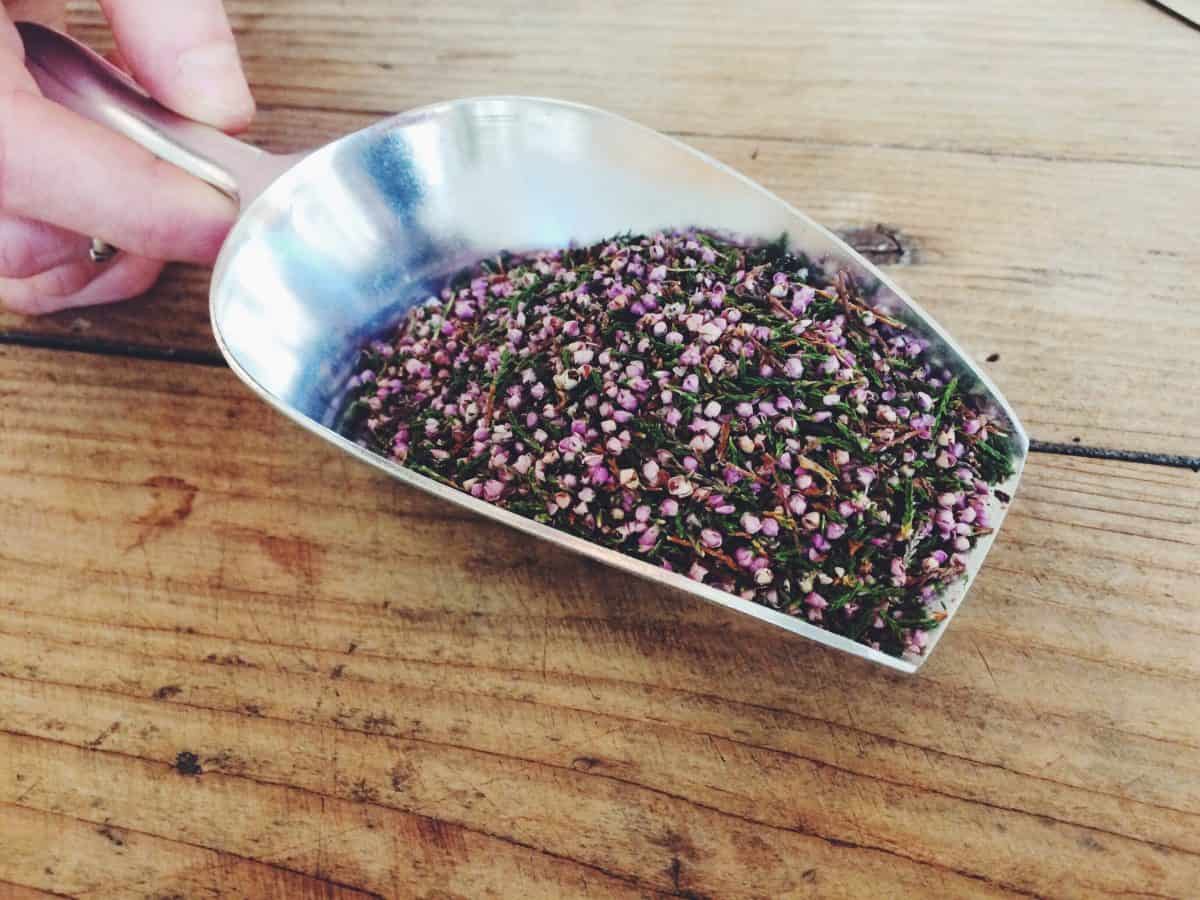
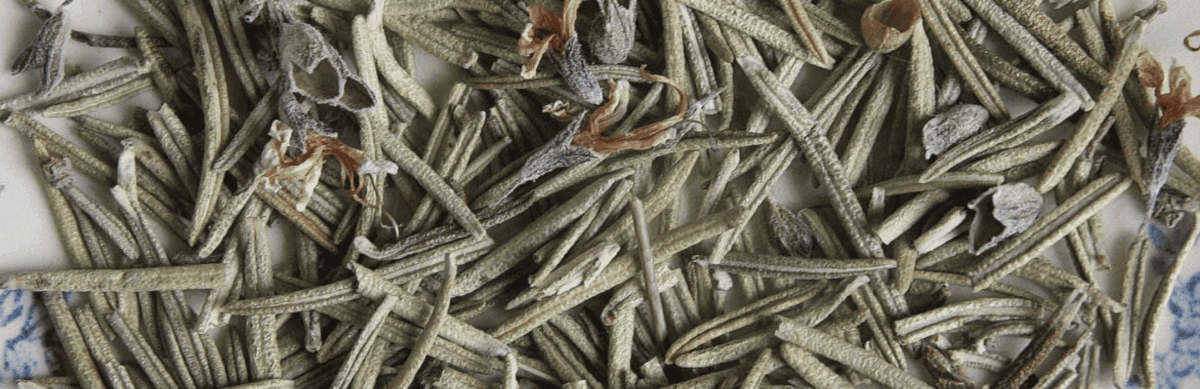
On the shelves: essential oils, hydrosols, food supplements, gemmotherapy, solid shampoos, Bach flowers, natural household products, macerates. And bulk plants, of course, raw, fragrant, Belgian when possible. L’Federal Agency for Medicines and Health Products (AFMPS) regulates the use of medicinal plants in Belgium, a framework that Louise knows like the back of her hand.
Custom herbal teas: the art of the right blend
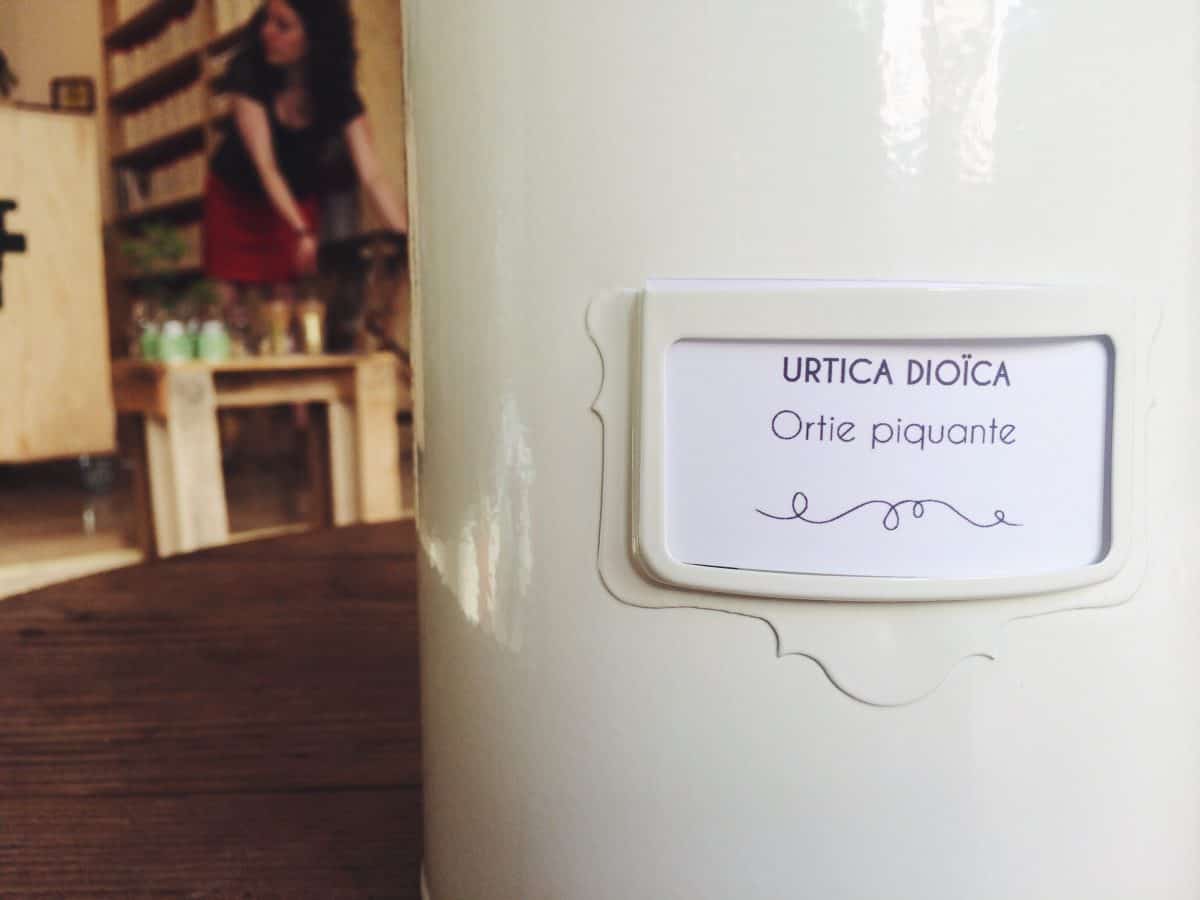
One of the prides of herbalismthese are his personalized herbal teas. Not standard bags. Thoughtful assemblies, built around a specific need. Among Louise’s creations, three have found their audience:
“ OLGA the tonic », with notes of nettle, blackcurrant and peppermint, a gentle boost for difficult mornings. “ZOÉ la cocooning”, raspberry, rose and marjoram, for the end of the day that deserves a cocoon. And ” Camille the soothing », with verbena, hawthorn and marjoram, to accompany letting go. These formulations are based on plants whose properties are documented: nettle is well known for its remineralizing properties, marjoram for its relaxing effects, and hawthorn is one of the plants whoseINSERM recognizes the interest in the management of stress and light sleep.
Short courses: ethics that do not compromise
Louise Dimanche is a trader, and she knows it. But she refuses to sell anything at any price. For six years, she did not sell charcoal, because the charcoal she found came from Taiwan, without any information on production. She waited. And today, it sources its supplies from a French sustainable forest which offers it a traceable, affordable, reliable product.
She deplores that the industry has infiltrated even the world of plants: wholesalers who sell verbena without odor, blackened leaves, degraded qualities. “ I would rather not sell than market something of poor quality. » Its suppliers are Belgian, Brussels or French when the product is not found locally. Each year, it sells between 15 and 20 kilos of raspberry leaves and nearly 40 kilos of fennel.
This requirement is part of a philosophy ofcircular economy and short circuits that the Belgian health authorities are increasingly encouraging in the natural products sector.
Workshops and space: learning to treat yourself differently
Right next to the store, the space offers workshops and training open to all: homemade organic cosmetics, introduction to medicinal plants, zero waste dynamics. A way to extend the encounter beyond the counter and convey real autonomy in daily natural care.
But the space is also a place for consultations: kinesiology with Vera Larock, hypnosis with Anne-Laure Terrade, shiatsu and hypnosis with Louise Ducamp, sophrology with Jihene Bali, nutritherapy with Margaux Crickx, and sex therapy with Alice Worth. So many complementary practices brought together under the same roof, for those looking for more personalized support.
These workshops and consultations meet a loyal, curious audience, often already convinced that well-being cannot be bought in supermarkets. And Louise finds there what she loves most about her job: “ Give advice and make it work. Seeing someone who is moved and who thanks you with a hug is great. »
Protecting a profession that is not yet protected enough
In Belgium, the title of herbalist is not a regulated profession in the strict sense. Legally, anyone who has validated skills can open an herbalist. This is why Louise co-founded theUnion of Herbalists of Belgium (UHB) with other professionals in the sector.
The UHB is campaigning for a clearer legal framework, better transparency on medicinal plants and their legislation, and above all real consumer protection. An approach that aligns with the work of theFAMHP on the regulation of plant substances for human use.
Because behind the counter of an herbalist’s shop, it’s not the sale of herbal teas. It is an act of health. And Louise Dimanche, who now regularly collaborates with general practitioners and pharmacists, knows this better than anyone.
Questions-Answers
You opened in 2017 when the profession of herbalist was still little known. What pushed you to take the plunge?
“CIt was either I opened a photo gallery or an herbalist. But I still like plants a little more than photography, so I opened my space. » The answer is direct, almost disarming. Behind the lightness of the tone, there is a deep conviction inherited from a pharmacist mother who had whispered to her, as a child, that medicines came from plants.
What exactly sets you apart from other natural product stores?
“ I wanted to have the most traditional herbalism possible. I don’t recognize myself in these stores where you can find cosmetics from big organic brands as far as the eye can see. What interests me is the connection with customers. I need to see people, listen to how they speak, observe how they move. »
And what makes you want to continue, after all these years?
“My favorite part of my job is giving advice and making it work. Seeing someone who is moved and who thanks you with a hug is great. »
Post Views: 102