










All processes in our body need energy. This energy is called adenosine triphosphate (ATP for short). Our cells ultimately produce ATP from the energy sources that we have consumed with food, that are stored or that we produce ourselves. Because that is the generally valid currency of our entire body.
If ATP is so important, wouldn’t it be exciting to know how most cells produce it? And can this knowledge also be used to influence energy production?
ATP is produced through various processes. It is mainly produced in the mitochondria. Certain types of bacteria and our red blood cells do not have mitochondria. These rely on a different ATP production.
In today’s article we will take a closer look at the mitochondria and therefore the production sites that can produce the most ATP. Over 90% of our cell energy is produced there.
What are mitochondria?
Mitochondria are cell organelles and, as mentioned above, are present in almost all cells in our body. Some people still know them from biology lessons as the “power plants of the cell”. And that’s pretty much true. Because we need them, among other things, to gain ATP. In addition to this important task, the mitochondria have a few other things to do:
-
Calcium storage and regulation
-
Induction of apoptosis (cell death) –> they release signals to initiate cell death!!! important, for example, to eliminate your own faulty cells
-
Production of free radicals
-
Heat production –> thermogenesis (maintenance of body temperature)
Now back to ATP production:
We’ll try to keep it very simple and use the following example: We took in food and broke it down into sugar molecules. What happens when these sugar molecules (glucose) enter a cell?
Glucose enters the cytoplasm inside the cell. If there is sufficient supply, it is converted directly into glycogen and stored in our fat cells. Or it is converted in the so-called pentose phosphate pathway and used as a building block. Now that’s very biochemical…That’s why we’re devoting ourselves to the third way – when the glucose is used directly to generate energy:
First, the glucose is fermented in the cytoplasm without oxygen and, over a few steps, converted into pyruvic acid (pyruvate). This is often called “anaerobic glycolysis,” where 2 ATP are available at the end.
The resulting pyruvate is either converted directly into the well-known lactic acid (lactate) and used, among other things, as an energy source or signal generator. Or the pyruvate continues into the mitochondrion, where aerobic glycolysis (Krebs cycle/citrate cycle and respiratory chain) takes place. This cycle occurs with oxygen. The pyruvate is converted into acetyl-CoA and this keeps the citrate cycle going. In the Citrate cycle A substance is converted into another substance and further converted again. This produces some energy and a lot of NADH (precursor to ATP). If Acetly-CoA is added again, the cycle can continue to produce NADH.
What happens to the resulting NADH?
We stay in the mitochondrion and look at the tension between the inner and outer membrane. There NADH is further used in the electron transport chain (respiratory chain). To put it simply: the release of electrons and protons creates additional ATP using the raw material NADH. The special thing is that 34 ATP are produced in the respiratory chain. This can only take place by adding oxygen and the hydrogen created in the citrate cycle. Water and CO2 are created as waste products.
If we now compare again: Without oxygen we can only obtain 2 ATP from 1 glucose molecule. With oxygen in a mitochondrion, we can end up gaining a total of 36 ATP. Even though the second way is slower, it is essential for sufficient energy coverage.
In all of these processes, the body needs the help of micronutrients and vitamins. This is yet another reason to eat a varied diet with sufficient nutrients.
Is it then important to have a lot of mitochondria in order to constantly produce enough energy and in the most productive way?
Yes. Above all, the energy production of mitochondria decreases with increasing age. They then also produce more free radicals, which contribute to increased inflammation and can accelerate the aging process. The mitochondrial DNA, which is independent of the nuclear DNA (mainly inherited from the mother), can also become damaged or impaired with increasing age. These changes can contribute to the general decline in cell function and the development of age-related diseases. Therefore, research on mitochondria and their function in old age is considered an important field to develop potential therapies for age-related diseases.
This means that from now on your own mitochondria begin to “train”.

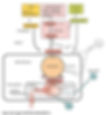
To get an idea, you can see a selection of cells and their average number of mitochondria in the table opposite. They reproduce by division.
For example, if the oxygen pressure drops and more mitochondria are needed for more energy, then there is a signal for the mitochondria to divide. However, this does not happen suddenly, but rather is a slow adaptation of the body after recurring stimuli. When the tissue in the body is supplied with oxygen and the pO2 (partial pressure of oxygen) is in the physiological range, this is called Normoxia. When the tissue or other parts of the body are undersupplied with oxygen, this is referred to as Hypoxia. This is evidenced by reduced pO2 in the blood and tissue. The aim is an interplay between the different stages. The body can compensate for these changes. But as is so often the case, only if we put the body in such situations from time to time can it react adequately, adjust the number of mitochondria and “arm itself” in the best possible way. Use it or lose it.
Further terms and stages:
Anoxia: Describes the complete absence of oxygen in tissue or other parts of the body.
Hypercapnia: Denotes increased carbon dioxide levels in the blood. This increases the pCO2 (partial pressure of carbon dioxide).
Hypocapnia: Describes a reduced level of carbon dioxide in the blood. This reduces the pCO2 (partial pressure of carbon dioxide).
So what can we do? Here are a few examples:
-
Intensive sports units
-
Endurance units/active movement
-
High in the mountains
-
exercise/run/hike at altitude
-
stay overnight at higher altitudes
-
-
Breathing exercises (e.g. with reduced oxygen)
-
cold stimuli –> demand/promote the brown fat cells
Brown fat cells have many mitochondria and the processes within the mitochondria produce heat. This is used to maintain our body temperature. (thermogenesis)
-
Heat stimuli –> (infrared) sauna
-
Balanced diet with sufficient nutrients, vitamins, trace elements
-
There are also cabins in which the oxygen content and partial pressure of oxygen can be artificially generated
Furthermore, individual solutions are required – depending on the given situation.
To try it out directly
Breathing exercise for stimulating the mitochondria:
Inhale – exhale – inhale – exhale – last as long as possible – then breathe in again – breathe out – breathe in – breathe out – last as long as possible….repeat for 5-10 minutes
And remember: it’s all about energy!
The content is reduced to the most essential specialist knowledge and shortened in some places, otherwise this would exceed the content of the article. For more in-depth knowledge, I am happy to provide personal literature recommendations upon request.
doi: 10.3389/fphys.2023.1114231